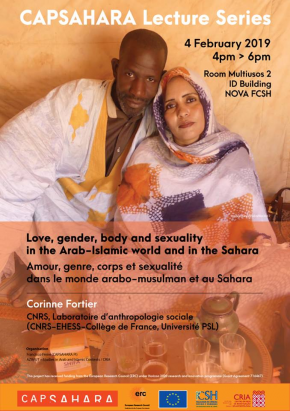
 [CAPSAHARA Lecture Series ] CNRS, Laboratoire d’Anthropologie Sociale (CNRS-EHESS-Collège de France, Université PSL)
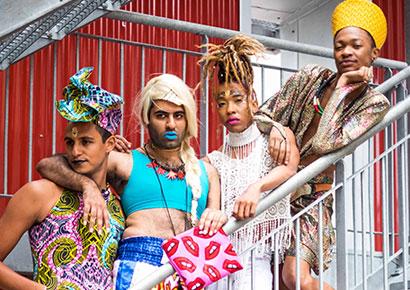 “In Africa public discourses, by authority figures like politicians and religious leaders, concerning gender often refer to moral identities rooted in sociocultural beliefs and religion. At the same time, human rights concerning sexuality and reproduction, are sometimes frowned upon as tokens of westernisation. These regimes of representation and public performances invoking social norms and african identities, are political tools. And even if gender cannot be adopted uncritically in african contexts, without the risk of misrepresenting important social dynamics, such as seniority (Oyewumi), efforts to downplay its importance as a descriptive tool do more for conservative, nativist agendas, and power dynamics associated with violence and inequality, than for human rights, a language that is not the language most people use to describe their problems.However, activisms for sexual citizenship and gender often work precisely on discursive levels (but not only) to convey new languages to people in order for rights to be claimed. By creating new spaces for debate activisms help deconstruct normativity as the only narrative and generate new forms of social commentary oriented towards better informed decisions for individuals, even if in their lives structural constraints remain a reality. Technology also helps boost this approach by expanding outreach, registering, giving more visibility.In this panel we welcome scholars to rethink gender as an analytical tool from a decolonial, decentered, pluralist, critical perspective by taking into account current activisms in gender in areas such as GBV, sexual violence, FGM/C, education, alongside discourses opposing social change and invoking social norms.


gender
Postes avec la étiquette gender
Archives
Auteur
- administrador
- adrianabarbosa
- Alícia Gaspar
- arimildesoares
- camillediard
- candela
- catarinasanto
- claudiar
- cristinasalvador
- franciscabagulho
- guilhermecartaxo
- herminiobovino
- joanapereira
- joanapires
- keitamayanda
- luisestevao
- mariadias
- marialuz
- mariana
- marianapinho
- mariapicarra
- mariaprata
- martacacador
- martalanca
- martamestre
- nadinesiegert
- Nélida Brito
- NilzangelaSouza
- otavioraposo
- raul f. curvelo
- ritadamasio
- samirapereira
- Victor Hugo Lopes
Data
- septembre 2026
- août 2026
- juillet 2026
- juin 2026
- mai 2026
- avril 2026
- mars 2026
- février 2026
- janvier 2026
- décembre 2025
- novembre 2025
- octobre 2025
Étiquettes
Les plus lus
- FilmLab Moçambique
- A Banalidade da Luz
- Intérprete - Please, love me!
- FIC Luanda 2026 apresenta primeiros filmes da Competição Internacional e reforça ambição de Angola no circuito africano de cinema
- Mário Lúcio de Sousa à conversa
- Novela gráfica «Caderno de Memórias Coloniais»
- ROOFTALK Conversa, Música e Artes
- ILUMINAÇÕES DA ALA OCIDENTAL DA RELAÇÃO DE LISBOA, de Sancho Silva
- Intimate Distance, Uncaptured City, Edson Chagas
- O Cinema por Dentro, em Monsanto